
[ TECHNICAL DEEP DIVE ]
Monitoring Remote Pumps, Generators and Machinery: A Partner's Guide
Pumps, generators, and industrial machinery often operate across locations where regular physical supervision is difficult. Construction sites, agricultural facilities, mining operations, utility locations, and remote industrial facilities may have equipment spread across large areas. For businesses managing these assets, knowing their location and understanding their operating condition are important for maintaining operational visibility. Remote equipment monitoring combines GPS tracking devices, wireless sensors, and connected telematics hardware to collect information from machinery and transmit it to a central monitoring platform. Depending on the selected devices and sensors, businesses can access information such as equipment location, operating status, temperature, fuel levels, and other supported parameters. This guide explains how remote monitoring works for pumps, generators, and machinery, along with the key hardware considerations partners should evaluate before recommending a solution.
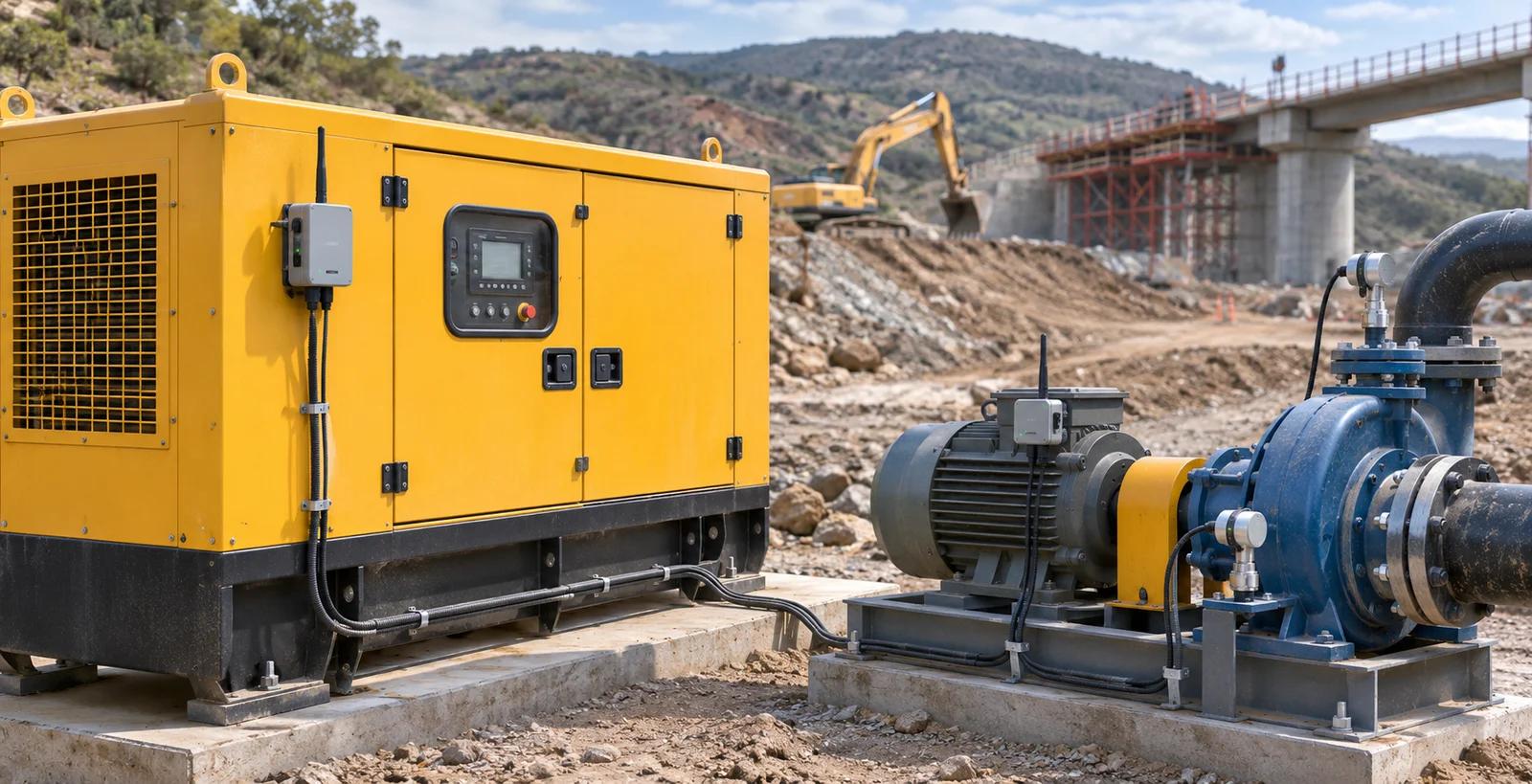
Why Remote Equipment Monitoring Matters
Equipment operating at remote locations can be difficult to supervise through regular manual checks alone. Unexpected operating changes, equipment movement, or interruptions may go unnoticed until someone visits the location.
Remote monitoring helps businesses access relevant equipment information without depending entirely on physical inspections.
Some key applications include:
- Monitoring the location of movable equipment.
- Reviewing generator operating conditions.
- Tracking selected pump performance parameters.
- Receiving alerts when configured thresholds are exceeded.
- Identifying unusual equipment activity.
- Reviewing historical data to support maintenance planning.
The information available depends on the monitoring hardware, connected sensors, communication network, and software platform.
Remote Pump Monitoring
Pumps are used across industries such as agriculture, construction, mining, water treatment, and industrial processing. Some operate continuously, while others are activated according to operational requirements.
Remote pump monitoring helps businesses collect information about selected operating conditions and review equipment activity through a connected platform.
Key Parameters to Monitor
Depending on the pump type and available interfaces, monitoring solutions may collect:
- Operating status: Digital inputs or compatible equipment interfaces can help identify whether a pump is running or stopped.
- Temperature: Compatible temperature sensors can monitor selected components or surrounding conditions.
- Pressure: Suitable pressure sensors can provide information about pressure levels within supported systems.
- Power status: Compatible electrical monitoring equipment can help identify power interruptions or changes in operating conditions.
- Location: GPS tracking devices can help monitor the location of mobile pumps and equipment transported between sites.
For telematics partners, the important step is understanding which parameters the customer wants to monitor and whether the selected hardware supports the required sensors and interfaces.
Remote Generator Monitoring
Generators provide backup or primary power in locations where grid electricity is unavailable, unreliable, or insufficient for operational requirements. They are commonly used at construction sites, industrial facilities, remote infrastructure locations, and temporary work areas.
Remote generator monitoring can help operators review equipment status and selected operating parameters without requiring constant physical supervision.
Important Generator Monitoring Features
- Operating status: Monitoring compatible inputs can help identify whether a generator is running, stopped, or experiencing a configured status change.
- Fuel level monitoring: Compatible fuel sensors can provide information about fuel levels and help operators review consumption patterns. Sensor selection depends on the generator's tank design and technical requirements.
- Battery voltage: Supported voltage monitoring can help track generator battery conditions.
- Temperature monitoring: Compatible sensors can monitor selected temperature parameters.
- Location tracking: GPS asset trackers can help monitor portable generators and identify unexpected movement.
Not every generator monitoring solution supports all these functions. Partners should verify the generator's available interfaces, sensor requirements, and device compatibility before recommending a hardware configuration.
Remote Machinery Monitoring
Industrial machinery may operate across factories, warehouses, construction sites, mining locations, and other facilities. Monitoring requirements vary according to the equipment type and its operating environment.
Remote machinery monitoring can combine tracking devices, wireless sensors, and connected gateways to collect selected information from equipment.
Common Monitoring Applications
- Equipment status: Identify selected operating or inactive conditions.
- Temperature monitoring: Review temperature readings from compatible sensors.
- Asset location: Track movable machinery and high-value equipment.
- Power monitoring: Monitor supported electrical parameters.
- Environmental monitoring: Collect data from compatible environmental sensors.
For example, a business managing machinery across several construction sites may use GPS asset trackers to monitor equipment locations and wireless sensors to collect selected operating information.
For system integrators, the solution should be designed around the customer's equipment and monitoring objectives rather than assuming one device can support every requirement.
Key Hardware Used in Remote Equipment Monitoring
Remote monitoring solutions typically combine multiple hardware components. Understanding their roles helps telematics resellers select suitable products for different applications.
1. GPS Trackers and Asset Trackers
GPS tracking devices help businesses monitor the location and movement of vehicles, machinery, and other movable assets.
For remote equipment applications, partners may evaluate:
- Positioning capabilities and GNSS support.
- Cellular connectivity and regional network compatibility.
- Internal battery capacity.
- Solar-assisted charging, where supported.
- Offline data storage.
- Environmental protection ratings.
Battery-powered and solar-powered asset trackers can be useful when equipment does not have a convenient external power source. Actual battery performance depends on reporting frequency, network conditions, environmental factors, and device configuration.
2. Wireless Sensors
Wireless sensors collect information about selected physical conditions and transmit it to compatible devices or gateways.
Depending on the model, connectivity options may include Bluetooth Low Energy (BLE), 1-Wire, or other supported communication methods.
Common applications include:
- Temperature monitoring.
- Fuel level monitoring.
- Equipment condition monitoring.
- Environmental monitoring.
- Selected industrial measurements.
Partners should verify sensor accuracy, measurement range, battery requirements, communication distance, and compatibility with the receiving device.
3. Telematics Gateways
Gateways can connect compatible equipment interfaces and sensors to a wider monitoring system. Depending on their supported interfaces, they may collect data through serial connections, digital inputs, analog inputs, or other communication methods.
A gateway may be useful when a project involves multiple sensors or equipment parameters that need to be collected and transmitted through a common system.
Connectivity Considerations for Remote Locations
Connectivity is one of the most important factors in remote equipment monitoring. Pumps, generators, and machinery may operate in areas where mobile network coverage is limited or inconsistent.
Before selecting hardware, telematics partners should assess the communication requirements of the project.
Factors to Evaluate
- Cellular network availability: Check whether supported cellular technologies and frequency bands are available at the equipment locations.
- SIM requirements: Review local SIM options, roaming arrangements, and data plans for projects covering multiple countries.
- Offline data buffering: Confirm whether devices can store supported records when connectivity is unavailable and transmit them after reconnection.
- Communication range: For wireless sensors, check the supported communication distance and environmental conditions that may affect signal quality.
- Reporting frequency: Consider how often data needs to be transmitted and how this affects battery life and data consumption.
Remote monitoring does not always require continuous data transmission. Some applications may need periodic updates, while others may require more frequent reporting or event-based alerts.
Challenges Partners Should Consider
Remote equipment monitoring can improve operational visibility, but selecting and connecting hardware involves several considerations.
1. Compatibility with Existing Equipment
Different pumps, generators, and machines use different interfaces and communication methods. A sensor or tracking device may not work with every equipment model.
Review available connections, electrical specifications, communication protocols, and supported sensor types before recommending products.
2. Harsh Operating Environments
Equipment may operate in locations exposed to dust, moisture, vibration, and temperature variations. Partners should check the operating temperature range, IP rating, housing design, and connector specifications of each device.
3. Power and Battery Limitations
Battery-powered monitoring devices require careful configuration. Frequent reporting and continuous sensor communication may reduce operating duration.
Evaluate power consumption and battery requirements against the customer's monitoring expectations.
4. Data Interpretation
Collecting equipment data does not automatically explain every operational issue. Sensor readings and alerts should be interpreted according to equipment specifications and operating conditions. Customers may need additional technical assessment before making maintenance or operational decisions.
Conclusion
Remote monitoring of pumps, generators, and machinery helps businesses access equipment location and operating information across distributed sites. By combining GPS tracking devices, wireless sensors, and compatible gateways, telematics partners can support a range of industrial and asset monitoring applications.
The right hardware depends on the equipment type, required parameters, power availability, connectivity, environmental conditions, and software compatibility.
For resellers and system integrators, understanding these requirements before sourcing products is essential to recommending practical monitoring solutions that meet customer expectations.
Partner with IoTedge
Looking for GPS trackers, wireless sensors, or telematics hardware for industrial monitoring projects? Contact IoTedge to discuss your requirements and explore suitable multibrand hardware options for your customers.
Frequently asked questions
Remote equipment monitoring uses connected devices, sensors, and software platforms to collect information about machinery and assets from a distance. Depending on the hardware, this may include location, operating status, temperature, fuel level, and other supported parameters.
GPS trackers can monitor the location and movement of portable pumps and generators. To collect additional information, such as fuel level or operating status, the selected device must support compatible sensors or equipment interfaces.
Depending on the generator and monitoring requirements, compatible fuel level sensors, temperature sensors, voltage monitoring devices, and operating-status inputs may be used. The correct selection depends on the generator's specifications and available interfaces.
Yes, some monitoring devices support offline data buffering. They can store supported records during temporary connectivity interruptions and transmit them when communication is restored. However, live monitoring and remote access may be unavailable during network outages.
Resellers should assess equipment compatibility, sensor requirements, power supply, connectivity, environmental protection, data transmission, and platform integration. Reviewing technical documentation and evaluating sample devices can help confirm whether the hardware meets the customer's requirements.
Sources and key takeaways
Remote monitoring
GPS trackers
wireless sensors
Read Next
All Blogs
[ TECHNICAL DEEP DIVE ]
Vehicle and Cargo Oversight for Fuel and Chemical Haulage: A Partner's Guide
Transporting fuel and chemicals involves operational requirements that go beyond conventional freight movement. Tanker operators must monitor vehicle locations, maintain visibility across transport routes, and keep track of cargo-related conditions where applicable. Unexpected stops, route deviations, equipment issues, and limited connectivity can make these operations more difficult to supervise. For fuel distributors, chemical transport companies, and logistics operators, connected monitoring technologies can provide useful information about vehicle movement and selected cargo parameters. GPS tracking devices help monitor vehicle locations and routes, while compatible sensors can collect information such as temperature, fuel levels, and other operating conditions. This guide explains how GPS tracking and cargo monitoring technologies support fuel and chemical transportation and what B2B partners should consider when sourcing hardware for these applications.

[ TECHNICAL DEEP DIVE ]
Temperature and Shipment Monitoring for Cold Chain Fleets: A Partner's Guide
Cold chain transportation requires careful monitoring of both vehicle movement and shipment conditions. Businesses transporting pharmaceuticals, fresh produce, dairy products, frozen goods, and other temperature-sensitive materials must maintain suitable conditions throughout the journey. Delays, equipment issues, and temperature variations can affect product quality and create operational challenges. GPS tracking devices and temperature monitoring sensors help transport operators collect information about vehicle locations and shipment conditions. When connected to a compatible telematics platform, these devices can provide visibility into route progress, temperature readings, and configured alerts. This guide explores the key technologies used in cold chain fleet monitoring and the factors B2B partners should evaluate before recommending hardware.

[ CASE STUDY ]
GPS Tracking and AI Dashcams for School and Staff Buses: A Partner's Guide
School and staff bus operations require consistent vehicle monitoring, reliable communication, and effective coordination between transport teams. Whether a fleet serves multiple schools, corporate offices, or employee transport routes, operators need visibility into vehicle movement and the ability to review important driving events. GPS tracking devices and AI dashcams offer complementary capabilities to address these requirements. GPS trackers provide location and movement information, while AI dashcams can record road conditions and, depending on the model, monitor selected driver behaviours. When connected to a compatible fleet management platform, these technologies help transport operators access useful information about their vehicles and journeys. This guide explains the key features and considerations partners should evaluate when recommending GPS tracking and AI dashcams for school and staff buses.